

Artificial intelligence has changed cybercrime. Criminals now produce polished phishing emails, realistic business messages, false identities, and convincing payment requests within seconds.
Poor grammar and obvious spelling errors once helped employees identify scams. Those warning signs no longer appear in many attacks. AI gives criminals stronger language, faster research, and personalized messages built around an employee’s job, employer, vendors, and leadership team.
Technology plays an important role in defense. Yet software does not stop every fraudulent email, phone call, text message, or meeting request. Employees still make decisions under pressure.
Effective cybersecurity awareness training prepares your workforce to recognize manipulation, pause before acting, verify unusual requests, and report suspicious activity.
Live in-person and webinar training offers the strongest format for teaching these skills. Employees hear current examples, ask questions, discuss workplace concerns, and learn how criminal tactics affect their daily responsibilities.
AI Makes Phishing More Difficult to Recognize
AI helps criminals write messages with professional language and accurate business terminology. Attackers use information from company websites, social media profiles, press releases, and professional networking sites to personalize their approach.
An employee might receive a message appearing to come from a senior executive, vendor, coworker, or financial institution. The message might reference a current project, recent conference, new employee, or planned transaction.
AI phishing attacks often seek:
- Login credentials
- Multifactor authentication codes
- Payroll information
- Sensitive business records
- Gift card purchases
- Vendor payment changes
- Wire transfers
The FBI reported phishing and spoofing among the most frequently reported cybercrimes during 2024. The agency also describes business email compromise as one of the most financially damaging online crimes.
The FBI has also warned about criminals using AI-generated emails, voice messages, video, and other content to support fraud against individuals and businesses.
These attacks target human trust. A security tool might flag a suspicious link. No software controls every conversation or prevents an employee from following a fraudulent payment instruction received through email, text, telephone, or video meeting.
Why Live Cybersecurity Awareness Training Works
Employees often view recorded compliance courses as another annual requirement. They click through slides, answer a few questions, and return to work. Completion provides documentation. Completion alone does not prove readiness.
Live training creates a different experience.
A skilled presenter explains how attacks work, why people respond, and which warning signs deserve attention. Employees ask questions based on their roles. The presenter adjusts the discussion based on employee concerns and recent threats.
In-person and webinar training also gives employees a shared experience. Teams hear the same guidance. Managers reinforce the same verification process. Employees learn where and how to report suspicious activity.
Engagement improves when training feels relevant. Employees pay attention when the presenter discusses attacks involving payroll, vendor payments, executive impersonation, remote access, customer records, and personal social media activity.
Live delivery also supports immediate clarification. An employee who misunderstands a verification rule gets an answer during the session. A department facing a specific threat receives guidance suited to its work.
CISA recommends at least annual employee training on recognizing phishing and responding to suspicious messages. Its guidance also recommends considering interactive phishing simulations to reinforce safer decisions. Read CISA’s guidance.
AI Cybercrime Requires Current and Relevant Education
AI threats change faster than traditional annual training schedules. A recorded course developed months earlier might miss new attack methods, criminal trends, or fraud examples.
Live presenters update content as threats change. They discuss recent AI phishing methods, business email compromise, executive impersonation, voice cloning, fraudulent meeting requests, and account takeover tactics.
Employees need more than a list of warning signs. They need a repeatable response process:
- Stop before responding to urgency or pressure.
- Review the sender, request, and communication channel.
- Verify sensitive requests through a trusted contact method.
- Never rely on contact information inside the suspicious message.
- Report the message to IT or security.
- Contact the organization’s response team after a suspected mistake.
The goal is not to turn every employee into a cybersecurity specialist. The goal is to help employees recognize risk and take the correct next step.
WHY CFISA
Michael Levin Brings Criminal Investigation Experience to Employee Training
The person leading the training matters.
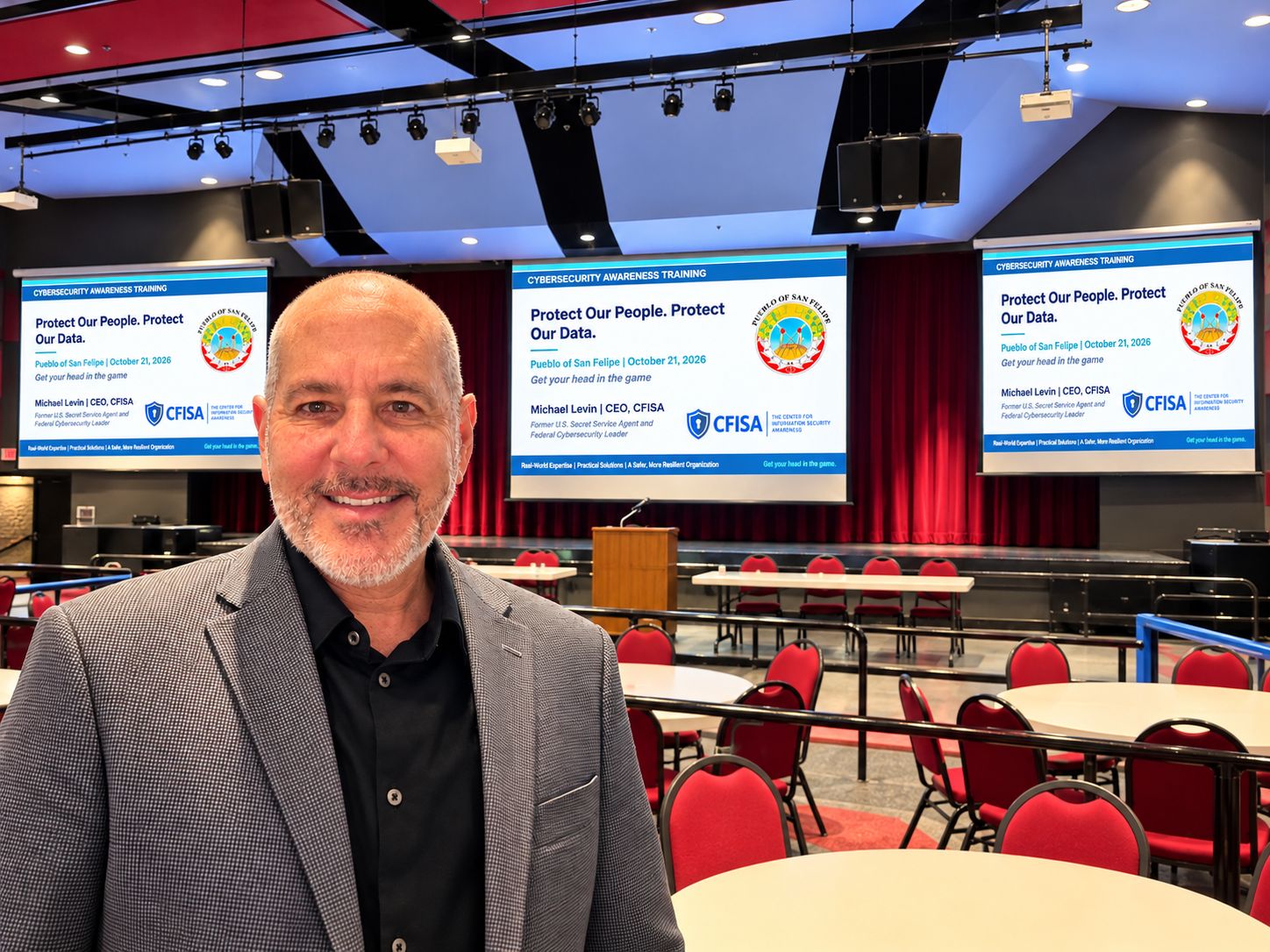
The Center for Information Security Awareness, CFISA, was founded by Michael Levin, a former U.S. Secret Service agent and former Deputy Director of the National Cyber Security Division at the U.S. Department of Homeland Security. He has spent more than 30 years in law enforcement, public service, cybersecurity, and employee education.
During his Secret Service career, Michael interviewed hackers and cybercriminals. Those conversations provided direct insight into criminal thinking, victim selection, social engineering, and the use of trust, fear, authority, and urgency.
This experience gives CFISA training a distinct advantage. Michael explains cybercrime from the attacker’s perspective. Employees learn why criminals target people, how criminals build believable stories, and why intelligent employees still fall for fraud.
Michael translates complex threats into clear, practical lessons. His live presentations keep employees engaged because the material connects criminal behavior to real workplace decisions.
CFISA In-Person and Webinar Training
CFISA provides in-person cybersecurity awareness training and live webinar cybersecurity training for businesses and organizations of all sizes.
Training topics include:
- AI phishing
- Business email compromise
- Social engineering
- Executive and vendor impersonation
- Password and account security
- Data protection
- Ransomware
- Safe email and internet practices
- Incident reporting
- Personal cybersecurity
CFISA works with each organization to address its workforce, risk profile, policies, and business operations. Live webinars support remote and distributed employees. In-person sessions support deeper interaction and direct workforce engagement.
CFISA’s new 2026 eLearning courses are now live. These courses help organizations reinforce live training, educate new employees, document completion, and provide ongoing cybersecurity instruction.
A strong program combines live education with regular reinforcement. In-person or webinar training creates awareness and employee engagement. eLearning supports consistency, onboarding, and continued learning.
FAQs
Contact CFISA for a Personal Consultation
AI cybercrime targets employees across every business function. Your workforce needs current education, clear verification procedures, and confidence to report suspicious activity.
Contact CFISA for a personal consultation to develop or review the cybersecurity awareness training program for your organization. CFISA will help you select the right combination of in-person training, live webinar instruction, and eLearning reinforcement.
Choose your next step.
Start online today, bring Michael to your organization, schedule a live webinar, or talk with us about enterprise delivery and procurement.